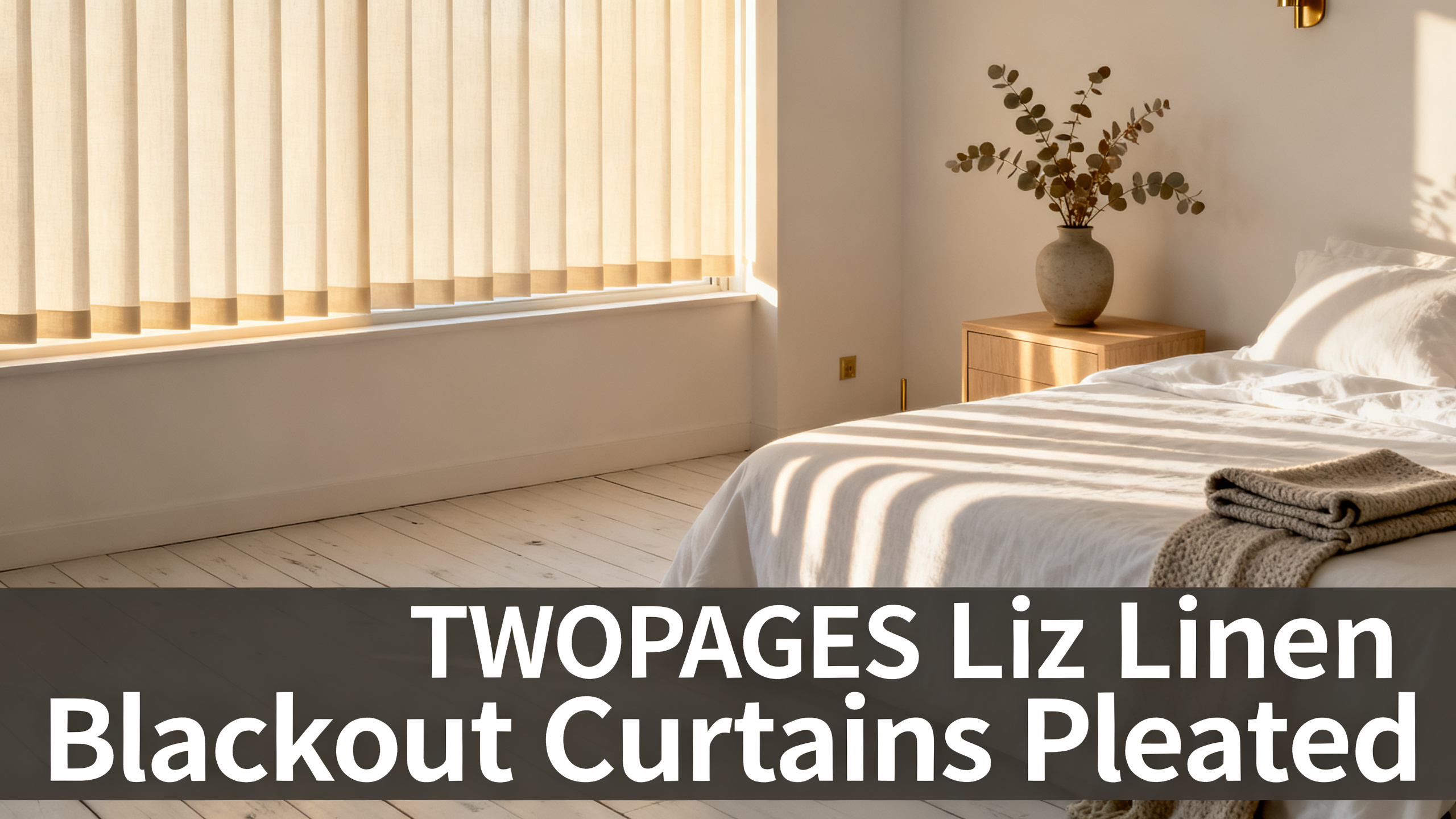
How we judge a linen curtain
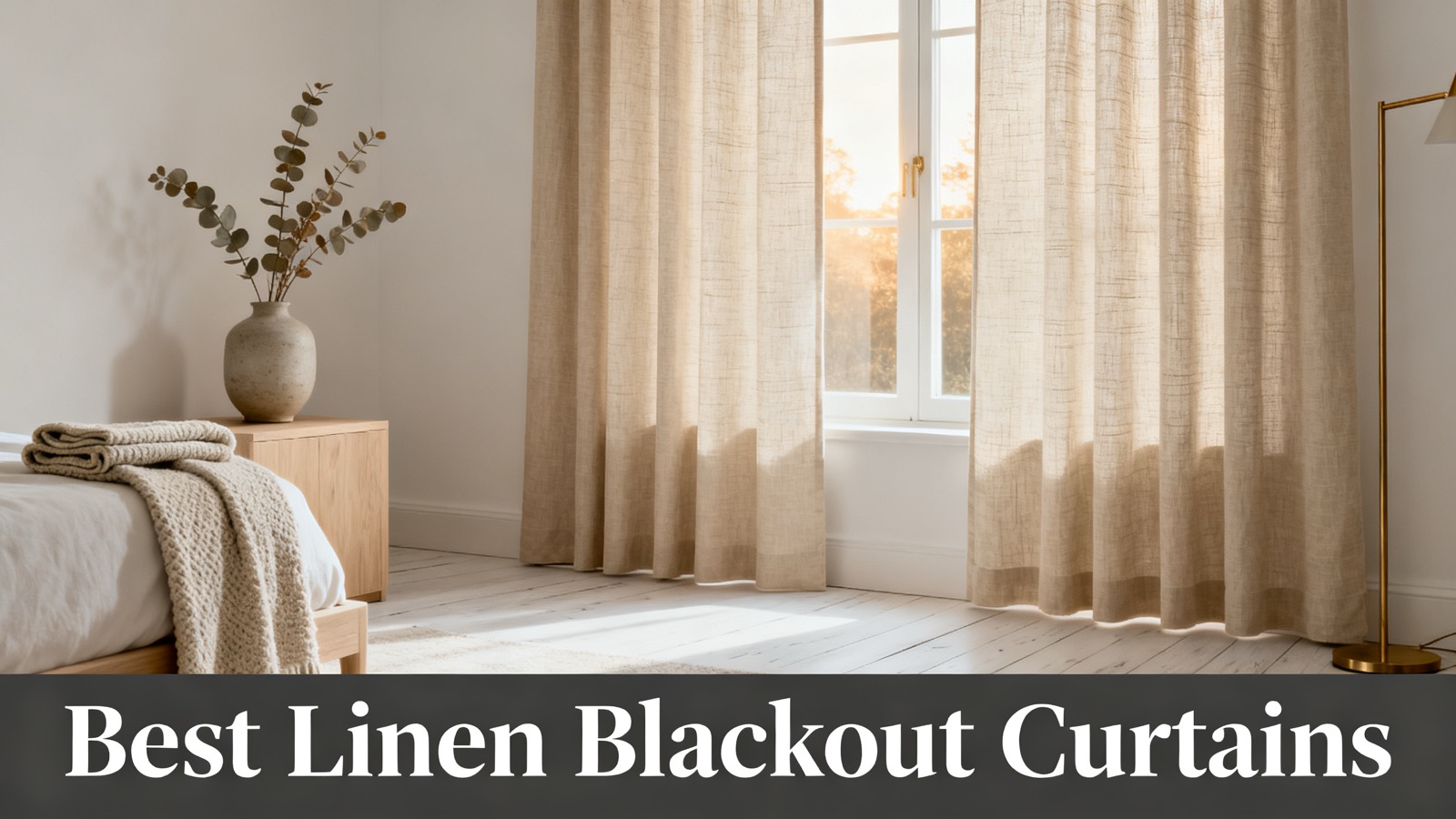
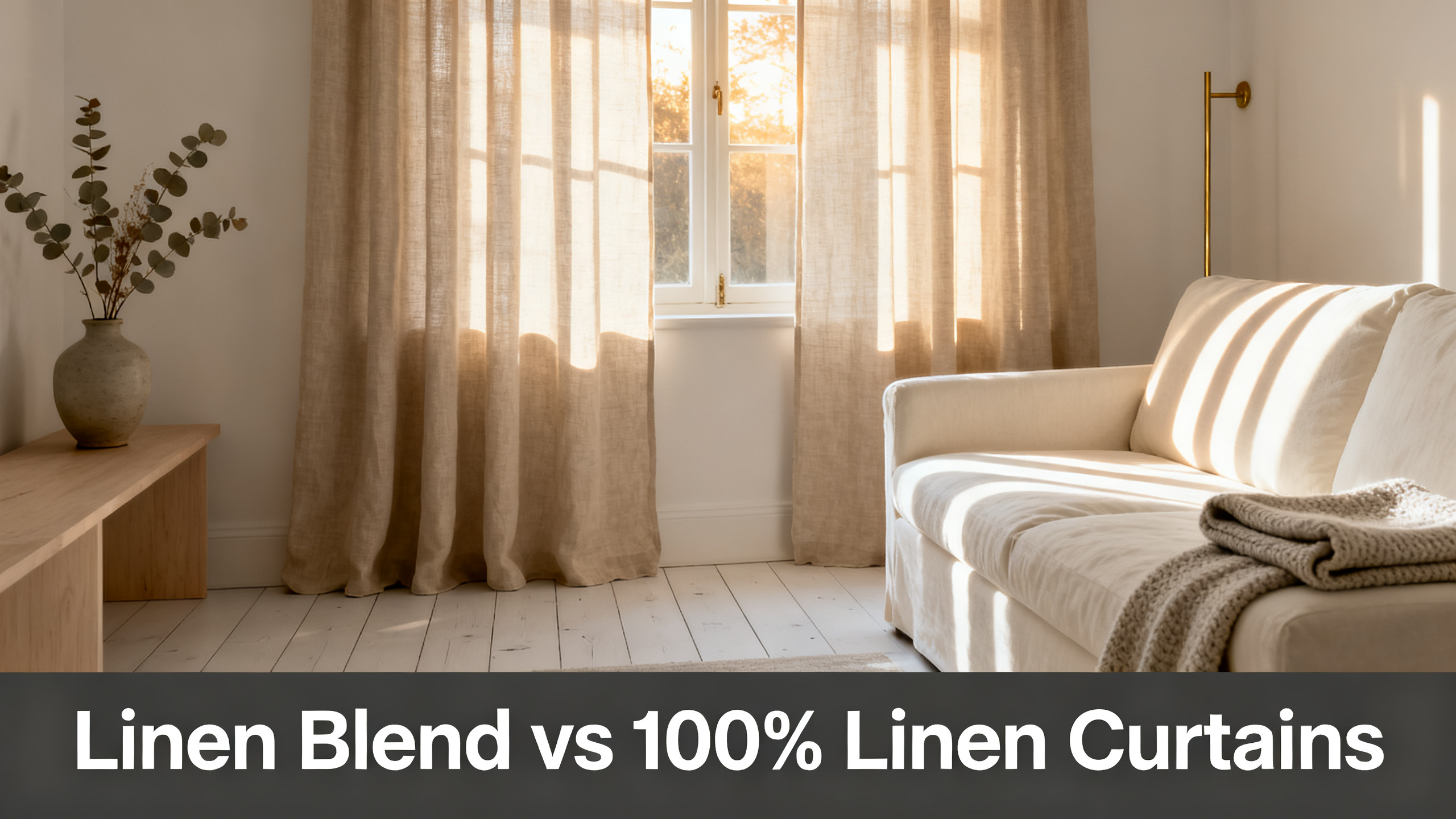
Fiber math decides most linen verdicts on this site. A label can say linen while the panel is a 10 to 15 percent blend, and the difference shows up in slub texture, drape and price, which is exactly what our blend vs 100 percent linen guide measures. The made-to-measure picks we keep recommending are ranked in the linen roundup, scored on weave weight, lining options and cost per panel from $59.99.
Linen forgives a lot: it filters light beautifully, ages well and works in nearly every room. It does wrinkle, and unlined panels block little light, so for bedrooms we usually point readers to the lined blackout versions or to heavier fabrics like wool and velvet.
Quick answers
Is a linen blend worse than 100 percent linen?
Not worse, different: blends wrinkle less and cost 20 to 40 percent less, while pure flax has deeper slub texture and a drier hand. We score them as separate products rather than pretending one replaces the other.
Do linen curtains block light?
Unlined linen is a light filter, not a light blocker: expect a soft glow, not darkness. Add the blackout liner option if the room needs to sleep in.
Why do linen curtains wrinkle so much?
Flax fibers have low elasticity, so creases hold. A steamer pass after hanging relaxes most of them, and the remaining texture is part of why people choose linen in the first place.