
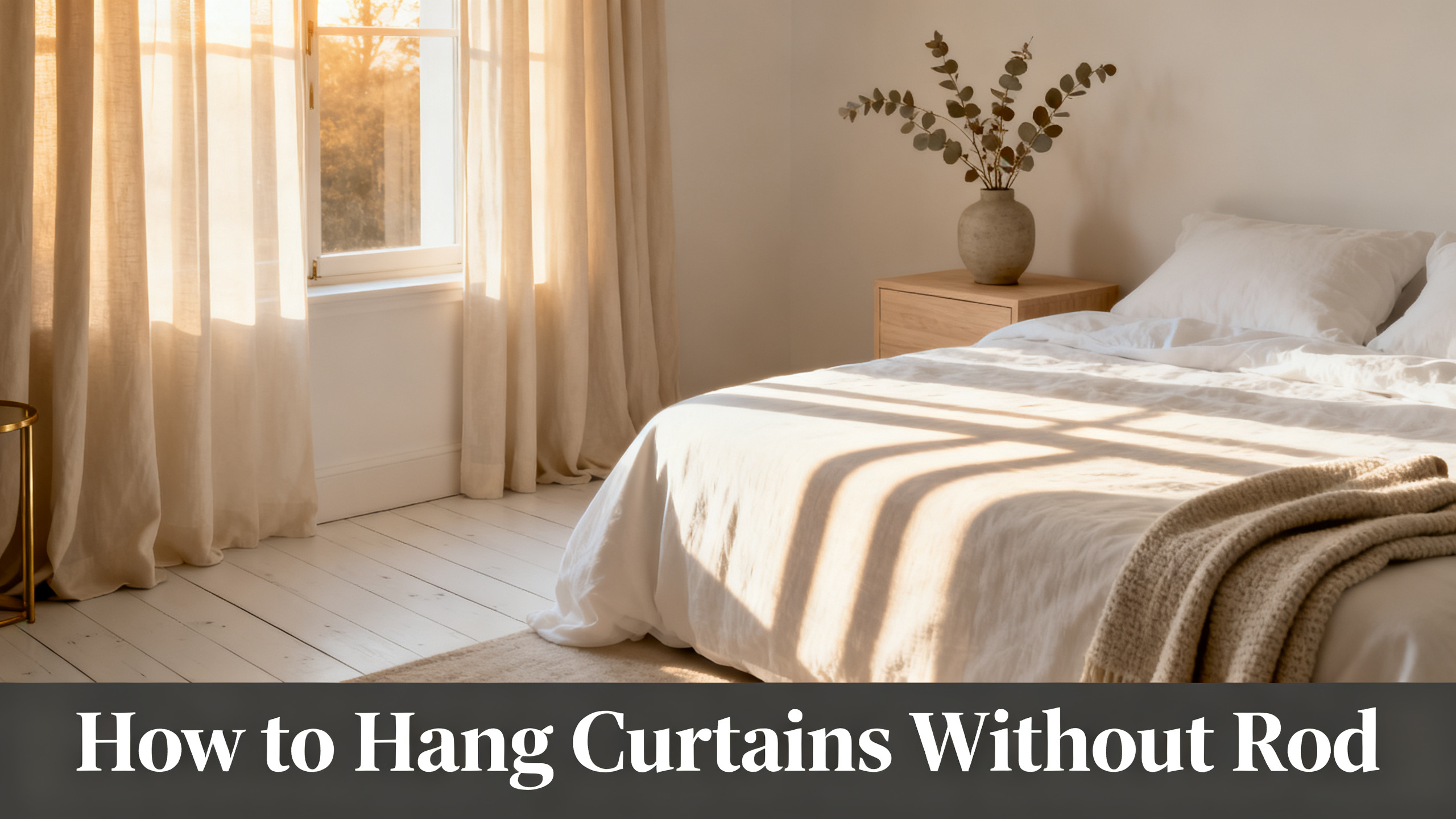
Done right, a $6 pack of adhesive hooks holds a linen panel for years. Done wrong, the panel is on the floor by Thursday, with a strip of your landlord’s paint attached.
The difference is never luck: it is matching the method to the panel weight and the wall you actually have. This guide ranks all seven rodless options, from renter-safe adhesive to a full ceiling track, and it slots into our complete curtain install hub alongside the measuring and mounting guides.
Renter-Safe Adhesive
Zero holes, up and hanging the same weekend, light to midweight panels only
Drilled but Rodless
Coat hooks and ceiling hooks carry 20+ lb with a boutique-hotel look
Ceiling Track
The pro answer: 30+ lb capacity, silent glide, blackout-tight to the ceiling

The panel built for rodless hanging
Liz Linen Drape Soft Top
from $59.99/panel · 90% polyester / 10% linen · 350 gsm heavyweight · 4-in-1 header (back tab, rod pocket, flat hook, tab top) · 38 colors. Final price depends on size and lining.
Use code JULY for 20% off · Free shipping over $300
The 7 Rodless Methods at a Glance
Before the aesthetics, one filter beats all others: panel weight. Every rodless method has a hard ceiling, and the table below sorts all seven by how much they actually carry.
| Method | Cost | Weight Limit | Wall Damage | Best For |
|---|---|---|---|---|
| Adhesive hooks + clip rings | $6 to $15 | ~4 lb per hook | None | Renters, light to midweight panels |
| Curtain wire kit | $10 to $25 | ~10 lb per 60″ span | None to 2 small holes | Sheers, cafe curtains, closets |
| Velcro / adhesive strips | $5 to $12 | ~2 lb per panel | None | Valances, lightweight sheers, RVs |
| Decorative coat hooks | $15 to $40 | 20+ lb anchored | 2 to 6 screw holes | Owners wanting the boutique look |
| Screw-in ceiling hooks | $8 to $20 | ~25 lb into joists | Ceiling holes | Canopies, room dividers, tall windows |
| Ceiling track system | from $200.99 (kit) | 30+ lb | Ceiling screw line | Blackout, dividers, the pro finish |
| Rope or picture wire | $5 to $15 | ~5 lb, style-limited | 2 anchor points | Rustic and farmhouse rooms only |
Each method below gets the full treatment: how it works, the real weight math, and the one mistake that sinks it.
Method 1: Adhesive Hooks and Clip Rings (Renter Favorite)
Six dollars of hardware against a $200 rod install: here is what you actually trade away. Command rates its large utility hooks at 5 pounds each, and the standard setup runs a row of hooks along a level line with clip rings bridging hook to fabric.
Placement follows the same rule as a rod: The Spruce curtain height rules put the line 4 to 6 inches above the frame. Mark it with a level first, because a rodless top edge shows every millimeter of drift.
How to Hang Curtains Without Drilling
The zero-hole playbook in full: every no-drill install path with weight limits per wall surface, for renters who cannot touch the drywall at all.
The weight printed on the packaging assumes a surface nobody actually has: smooth, spotless, and cured for a month. Plan on 3 to 4 hooks per panel and treat 4 pounds per hook as the real-world ceiling, which puts a heavyweight 350 gsm linen panel right at the edge of the envelope.
⚠️ The 4 adhesive fail modes:
Textured or brick walls (adhesive grips peaks, not surface). Paint cured under 4 weeks (the hook peels the paint, not the wall).
Bathroom or kitchen humidity (adhesive creeps loose over months). And skipping the 48 hour cure time before loading: the most common one, and the panel lands on the floor by Thursday.
Method 2: Curtain Wire and Cable Kits
A curtain wire kit is a steel cable stretched between two anchor points, with the panel riding on hooks or rings. It is the cleanest-looking no-rod option: from across the room the fabric appears to float.
Flat hook headers are the natural partner here, since the drapery hooks slide straight onto the wire. A basic kit carries roughly 10 pounds over a 60 inch span, and a turnbuckle-style tensioner keeps the line straight where a simple hook-to-hook kit droops within weeks.
⚠️ The wire sag math: past a 60 inch span, even a tensioned wire dips visibly in the middle under load. Wider windows need a center support screwed at the midpoint, which quietly turns a no-drill method into a one-hole method. Budget for that hole or split the window into two shorter runs.

One Panel, Four Rodless-Ready Headers
The Soft Top ships with a 4-in-1 header: flat hooks ride a wire or track glider, tab tops loop straight onto wall hooks, and the back tab keeps its slack hidden. from $59.99/panel, cut to your exact drop so nothing puddles on adhesive-height installs.
Method 3: Velcro and Adhesive Strips (Lightweight Only)
Velcro strips glue one side to the wall or window frame and sew or stick the other to the panel top. For valances, RV windows, and featherweight sheers, it is the fastest install on this list.
For anything else, be honest with the scale. Adhesive Velcro reliably carries about 2 pounds per panel, and a heavyweight linen like the 350 gsm Liz Soft Top is disqualified before you open the package.
📊 Real-World Weight Limits by Method
Conservative real-world figures. Manufacturer ratings assume ideal smooth, cured, dry surfaces.
Method 4: Decorative Coat Hooks and Knobs (Drilled, No Rod)
This is the boutique-hotel move: a row of brass or matte-black coat hooks, with tab top loops dropped straight over them. No rod, no rings, and the hardware reads as intentional design rather than compromise.
Since the hooks are screwed in, weight stops being the problem: anchored properly, each hook carries 20 pounds or more. Follow the This Old House drywall anchor guide and size every anchor at twice the expected load, spacing hooks every 6 to 8 inches so the top edge scallops evenly instead of sagging between points.
How to Hang Curtains With Hooks: The Full Guide
Drapery pins, flat hooks, S-hooks, and clip rings decoded: which hook matches which header, and the spacing math that keeps the top edge from scalloping.


Method 5: Screw-In Ceiling Hooks and S-Hooks
Your lease says no holes. Your ceiling says otherwise: many rental agreements restrict walls specifically, and a ceiling hook line is both less visible and structurally stronger.
Screwed into joists, each hook carries around 25 pounds, with S-hooks linking down to flat hook headers or clip rings. Measure the drop from the ceiling, not the frame, or the panel finishes 8 to 12 inches short of where you pictured it.
Method 6: Ceiling Track Systems (The Pro Rodless Answer)
A track is what hotels, hospitals, and design studios use when a rod will not do: a slim channel at the ceiling with gliders that carry the panel silently, around curves if needed. Two Pages sells this as a complete package, the Atlanta blackout curtain with ceiling track kit, from $200.99 for spans of 3 to 18 feet.
Capacity runs 30 pounds and up, which makes the track the only rodless method that handles blackout and heavyweight panels without compromise. It also holds the fabric tight to the ceiling line, closing the light gap a rod always leaves; the same logic covered in our guide to hanging curtains from the ceiling.

🧵 Which Liz 4-in-1 Header for Which Method
Tab Top
Loops drop straight over coat hooks and knobs. The no-hardware-visible pick.
Flat Hook
Rides curtain wire, S-hooks, and track gliders. The most versatile rodless header.
Back Tab
Hides the hardware from inside the room on wire and hook installs.
Rod Pocket
Wire only, and only with light fabric that gathers without gripping.
Grommet headers are the one style that cannot go rodless: the metal rings need a rod through them.
Method 7: Rope or Picture Wire (The Rustic Compromise)
Jute rope or braided picture wire strung between two anchor points reads either intentional or unfinished, and there is nothing between the two. In a farmhouse kitchen or a cabin bunk room, it works; in a formal living room, it never will.
Keep it to lightweight panels under 5 pounds, accept the visible dip in the middle, and treat it as a style statement rather than an engineering solution.
🧭 Which Method for You: 3 Questions
1. Can you drill at all?
No: adhesive hooks, Velcro, or an adhesive-end wire kit. Yes: keep reading.
2. Over 10 lb per panel?
Yes: coat hooks, ceiling hooks, or track only. No: every method stays on the table.
3. Blackout the goal?
Yes: ceiling track, full stop: it closes the top light gap. No: pick by look and budget.
When a Rod Is Still the Better Answer
For anything over ten pounds on walls you own, I stop suggesting and start insisting: track or rod. A properly anchored rod costs less than a track, carries the same weight, and gives you finials and layering options no rodless method matches.
How to Hang Curtain Rods: The 6-Step Install
If you own the walls and the panels run heavy, a properly anchored rod is still the 10-year answer. The 6-step install that stays level, in 35 minutes per window.
The rodless methods win everywhere else: rentals, curved bays, ceiling-tight blackout, and any room where visible hardware fights the design.
Pro Tips: The 5 Rules Every Rodless Install Shares
Whatever method survived the questions above, these five rules decide whether it holds.
Order the 38-Color Liz Linen Booklet First
A rodless install puts the fabric closer to the wall, so wall paint bleeds into how the color reads. The booklet ships flat for $3.99 and lets you check the exact colorway against your paint before committing to custom panels.
Now Pick the Panel Built for It
Method picked, hardware line marked: the last variable is a panel whose header actually matches. The Liz Linen Drape Soft Top covers all seven methods with one 4-in-1 header, and our full Liz Linen Drape Soft Top review breaks down how the 350 gsm slub weave drapes on each of them.
Specs and current colorways sit on the Liz Linen Drape Soft Top product page; order the drop measured to your hook or wire line, not to where a rod would have been.


Method Picked. Now Order the Panel That Matches It.
Liz Linen Drape Soft Top hangs from hooks, wire, or track without a rod in sight. from $59.99/panel, 38 colors, 350 gsm heavyweight, made to your exact drop. Code JULY (20% off) · Free shipping over $300 · 10 to 12 day lead time.
Frequently Asked Questions
Can you hang curtains without a rod?
Yes, and there are seven proven ways to do it. The renter-safe options are adhesive hooks with clip rings, curtain wire kits, and Velcro strips, none of which touch the drywall.
If drilling is allowed but you want the rodless look, decorative coat hooks, screw-in ceiling hooks, and ceiling track systems carry far more weight. The deciding factor is almost always panel weight: adhesive tops out around 4 to 5 pounds per hook, while a ceiling track carries 30 pounds or more.
How much weight can Command hooks hold for curtains?
Command rates its large utility hooks at 5 pounds each, but that rating assumes a smooth, clean, fully cured painted surface. On textured walls, paint under 4 weeks old, or humid rooms, real-world capacity drops sharply.
For a curtain install, plan on 3 to 4 hooks per panel and keep total panel weight under about 4 pounds per hook of rated capacity. A heavyweight 350 gsm linen panel sits near the top of that envelope, so add a hook rather than trusting the maximum.
How do you hang curtains with hooks instead of a rod?
Two paths work. With tab top or back tab headers, the loops slide directly over wall-mounted hooks, spaced every 6 to 8 inches so the top edge does not scallop unevenly.
With flat hook headers, drapery pins or S-hooks connect the panel to adhesive hooks, eye screws, or a wire. Mark a level line first: hooks set by eye drift up to half an inch across a window, and a rodless install shows every millimeter of drift.
What is curtain wire and how much weight does it hold?
Curtain wire is a steel cable kit stretched between two anchor points, with panels riding on hooks or rings. Basic kits hold roughly 10 pounds over a 60 inch span; past that span the wire visibly sags unless you add a center support.
It suits sheers and midweight linens, cafe curtains, and closet doorways. Tension matters more than strength: a turnbuckle-style tensioner keeps the line straight where a simple hook-to-hook kit droops within weeks.
Can you hang blackout curtains without a rod?
Yes, but skip the adhesive tier. Blackout and heavyweight panels typically run 4 to 8 pounds each, which exceeds what adhesive hooks or Velcro reliably carry.
The two rodless methods that work are screw-in coat hooks anchored into studs or toggles and ceiling track systems, both rated well past 20 pounds. A track is the better answer for blackout specifically, because the gliders hold the panel tight to the ceiling line and close the light gap a rod leaves at the top.
How do renters hang curtains without drilling or a rod?
The standard renter stack is adhesive hooks plus clip rings: wipe the wall with rubbing alcohol, place the hooks along a level line, wait the full 48 hour cure time, then clip in the panel.
Curtain wire kits with adhesive-mounted ends are the step up for wider windows. Keep panels in the lightweight to midweight range and order the exact drop you need, because hemming puddled fabric is not an option when the hooks cannot move without re-curing.
Which curtain header works best without a rod?
The most versatile option is a multi-header design like the Liz Linen Soft Top’s 4-in-1: tab tops loop straight onto wall hooks, flat hooks ride a wire or track glider, and the back tab hides the hardware from inside the room.
Grommet headers are the worst rodless choice, since the metal rings need a rod passing through them. Rod pockets only work on wire, and only with lightweight fabric that gathers without gripping.
Is a ceiling track better than a curtain rod?
For rodless installs, a track is the strongest and cleanest option: 30 pounds or more of capacity, silent gliding, curves around corners, and a ceiling-tight fit that blocks more light. Two Pages sells its Atlanta system as a complete track plus blackout panel kit from $200.99, sized for spans of 3 to 18 feet.
A rod still wins on cost for a single standard window you own, and on style when you want visible finials. The track wins on function everywhere else.
